Article content
Night photography has a different rhythm from daytime photography. The light is subtle, the process is slower, and the final image is often harder to predict before the exposure is made.
That uncertainty is part of what makes it interesting.
When you photograph at night, you are working with light your eyes may barely register. A long exposure can reveal color, mist, stars, reflections, shadows and small details that were only partly visible in the moment. The camera records the scene in a different way than you experience it standing there.
For atmospheric night photography, the goal is to create an image that carries a feeling.
That feeling can come from light, weather, timing, subject, composition, color, post-processing or something unexpected that happens while you are out there. Often it is a combination of all of them.
This article is about how I approach atmosphere in night photography and how you can begin to see those elements more clearly in your own work.
Atmosphere begins with feeling, then every choice supports it.
What makes a night photograph atmospheric?
An atmospheric image creates an emotional response.
It might feel quiet, cold, mysterious, lonely, dreamlike, peaceful or vast. The photographer can guide that feeling through choices in the field and in post-processing, but the viewer completes the experience in their own way.
The important part is that the image gives them something to feel.
For me, atmosphere usually begins before the camera settings. It begins with paying attention to what the place feels like and then making choices that support that feeling.
Start with the mood of the place
Before thinking too much about technique, it helps to ask a simple question:
What is the mood of this scene?
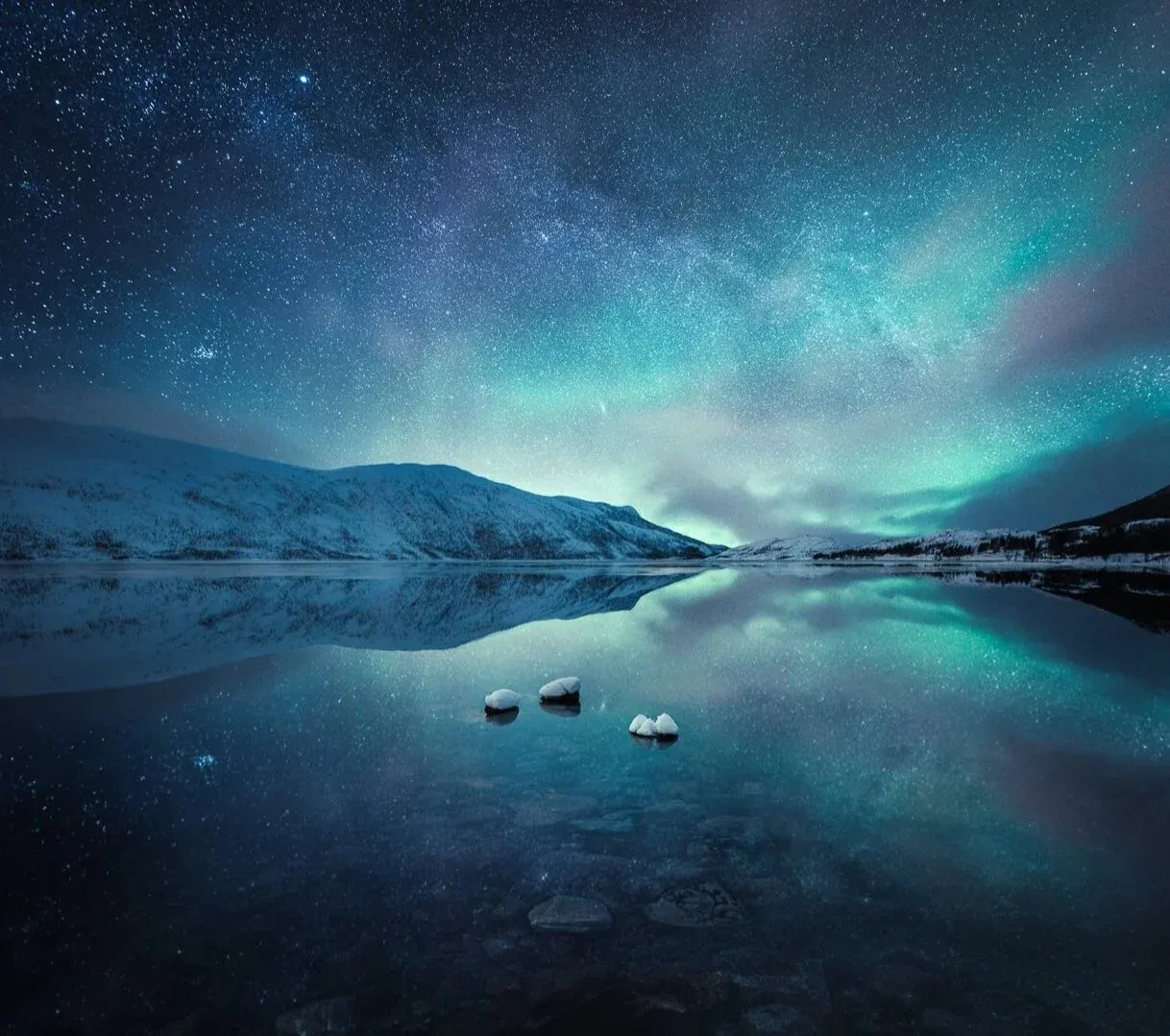
At night, the mood can be clear. Moonlight over snow can feel calm and cold. Fog on a forest road can feel mysterious. A distant glow behind a hill can feel cinematic. A clear sky full of stars can change the scale of the landscape completely.
Sometimes the mood is more subtle. It may come from a small subject, a shape, a reflection or the way the road disappears into darkness.
Once you understand what draws you to the scene, the technical choices become easier. You know whether the image needs to be darker, softer, colder, wider, tighter, simpler or more dramatic.
Atmosphere is easier to create when you know what feeling you are trying to protect.
Atmosphere starts with a clear feeling, then technical choices support it.
Night simplifies the landscape
One reason night photography works so well for atmospheric images is that darkness simplifies the scene.
During the day, a landscape can be full of details competing for attention. At night, many of those distractions disappear. Shapes become stronger. Small lights become more important. Shadows become part of the composition. Fog, snow and mist can separate the subject from the background.
This allows simple places to become visually interesting.
A normal country road can become a strong leading line. A lone tree can become the main subject. A frozen shoreline can feel unusual. A small hill with light behind it can feel like a scene from science fiction.
You do not always need a famous location for a strong night photograph. Often, timing and conditions matter more than the location itself.
Light is the main tool
Light is the foundation of atmosphere.
At night, the light may come from many sources:
- moonlight
- blue hour
- stars
- northern lights
- distant towns
- road lights
- headlamps
- car headlights
- reflections
- light pollution
- city glow
Each source creates a different feeling.
Moonlight can make a landscape feel still and quiet. Blue hour can add softness. Northern lights can bring movement and energy. A headlamp in fog can create depth. Light pollution behind a hill can become part of the image instead of something to avoid.
Look for how the light shapes the subject, not only how bright the scene is.
A small amount of light in the right place can define the entire image.
Use weather as part of the subject
Weather is one of the strongest tools for creating atmosphere.
Fog, mist, snow, clouds, wind and cold can all change the way a place feels. They can simplify the scene, hide distractions, create depth and add emotion.
Fog is especially powerful because it changes how light behaves. A subject that looks flat in clear conditions may become much stronger when fog separates it from the background.
In one of my images, I photographed a lonely tree in misty weather at night. At first, the scene felt too subtle. The tree was there, but it did not stand out enough. Instead of lighting the tree directly, I used a headlamp from behind the tree to illuminate the fog around it.
That made the atmosphere visible.
Weather can turn a simple scene into a powerful atmospheric frame.
Let timing transform the location
Timing can turn a simple place into something memorable.
A familiar road can look completely different in a snowstorm. A lake can change when mist rises from open water. A popular location can feel new when photographed at night from a low angle. A field can become vast when the visibility is low and the horizon disappears.
Instead of only searching for dramatic landscapes, look for moments when conditions change the character of a place.
Ask:
- What happens here in fog?
- What happens here under moonlight?
- What happens here after fresh snow?
- What happens here during blue hour?
- What happens here when distant lights become visible?
- What happens here when most of the scene disappears into darkness?
Atmospheric photography often comes from seeing familiar places under unfamiliar conditions.
Plan the shoot, but leave room to react
Planning is useful in night photography. Weather, moon phase, cloud cover, aurora forecasts, location access and safety all matter.
But a plan should not become so rigid that it stops you from seeing what is happening.
My own process usually starts with a loose idea. I may want to photograph stars, moonlight, fog or winter conditions. I choose a few possible locations and head out. Once I am there, I try to stay open to smaller details and unexpected changes.
Often the best image comes from something I did not plan exactly.
The plan gets you outside. The image often comes from how you respond once you are there.
Use long exposure as feedback
Long exposure changes the way you work.
Because you cannot see the final result immediately with your eyes, each exposure gives feedback. It shows how the camera records the light, how much detail appears in the shadows, how the stars look, how the fog reacts and whether the composition holds together.
This slow process can be useful.
You make an exposure, look at the result and adjust. Maybe the image needs less sky. Maybe the foreground needs more space. Maybe the subject is too small. Maybe the shadows should stay darker.
Night photography often rewards this gradual refinement.
Find a subject inside the atmosphere
A common problem in atmospheric photography is that the mood is beautiful, but the image has no structure.
Fog, snow, darkness and stars can all feel inspiring in person, but the photograph still needs something to organize the viewer's attention.
That subject does not need to be dramatic. It can be simple:
- a tree
- a road
- a person
- a hill
- a rock
- a reflection
- a shoreline
- a cabin light
- a foreground pattern
- a distant silhouette
In low light, a clear subject becomes even more important. It gives the atmosphere a place to gather around.
Change focal length to change the mood
Wide angle lenses are useful in night photography, especially when including stars, auroras or foreground interest. They create a sense of space and can make the viewer feel inside the scene.
But atmospheric images do not always need to be wide.
A longer lens can isolate mist, compress distance and make small details more important. A distant island, a line of trees, a moonlit shoreline or fog rising from open water may become stronger when you move away from the obvious wide view.
Changing focal length changes the emotional distance of the image.
Use people for scale and presence
A person in the frame can change the feeling of a night photograph.
In a vast landscape, a figure gives scale. In fog or darkness, a person can add mystery. In a moonlit scene, they can make the image feel more human and present.
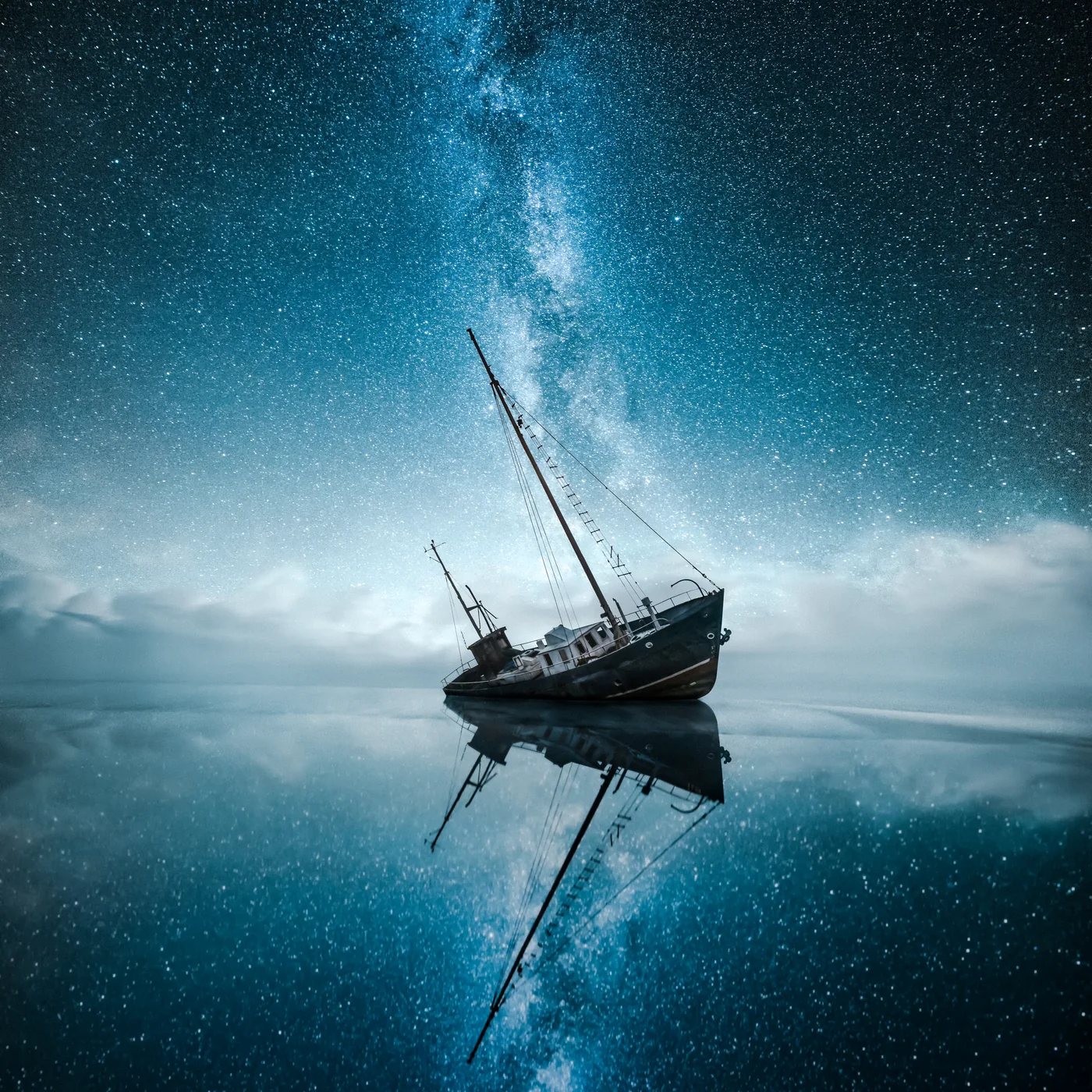
The person does not need to dominate the image. Often, the smaller the figure, the stronger the sense of space.
Technique should support the image
Night photography requires technical control.
You need to understand focus, shutter speed, aperture, ISO, noise, star movement and how your camera behaves in low light. You also need to know when to use a single exposure, when to blend exposures and when to keep things simple.
But technique is not the final goal.
The purpose of technique is to make the image possible. Once the basics are familiar, you can focus more on the scene, the mood and the choices that shape the final photograph.
Post-processing completes the atmosphere
Post-processing is a natural part of atmospheric photography.
The raw file often contains more information than the final image needs. Editing helps decide what to emphasize and what to reduce.
In my own work, editing is usually about bringing the image closer to the feeling of the scene. That can mean adjusting color temperature, contrast, shadows, highlights, local masks, haze, clarity or selective brightness.
The edit should serve the mood.
If the processing becomes louder than the image itself, the atmosphere can disappear.
Subtle editing protects atmosphere and emotional depth.
Be careful with rules
Composition rules can help, especially when learning. Leading lines, balance, foreground interest and subject placement all matter.
But atmospheric images do not always need to follow a perfect formula.
The main question is whether the composition supports the feeling of the scene.
If a rule helps, use it. If it weakens the atmosphere, let it go.
Develop your own visual patterns
Personal vision grows through repetition.
The more you photograph, the more you notice what you keep returning to. Certain weather, certain light, certain subjects, certain colors and certain emotions begin to appear again and again.
For me, those patterns have often been quietness, winter, fog, stars, minimalism, solitude and the Nordic night.
If you want to develop a stronger personal style, pay attention to what consistently draws you in.
Final thoughts
Atmospheric night photography is a balance of preparation and openness.
You need enough technique to work confidently in the dark. You need enough planning to be in the right place when conditions are possible. You need enough patience to let the scene reveal itself. And you need enough sensitivity to recognize when a small detail, a subtle light or a shift in weather is worth following.
The strongest night photographs often come from simple elements working together:
light, weather, timing, subject, composition and feeling.
When those elements align, even an ordinary place can become memorable.
Continue learning my complete creative workflow
If this way of approaching photography speaks to you, I created the Complete Bundle to bring my main photography learning resources together in one place.
Everything in one place: presets, courses, and editing guides for stronger landscape photography.
Campaign price: 97€ Bundle value: 370€ Regular bundle price: ~~149€~~ Offer ends May 6, 2026.
The editing system behind the look
EPIC Preset System
The look in this article is built in Lightroom. EPIC is the full editing system for those decisions — light, colour, tone and atmosphere — as a repeatable workflow.
- The EPIC presets and colour profiles
- A ten-step, base-to-final Lightroom workflow
- A video walkthrough (every preset and mask stays adjustable)